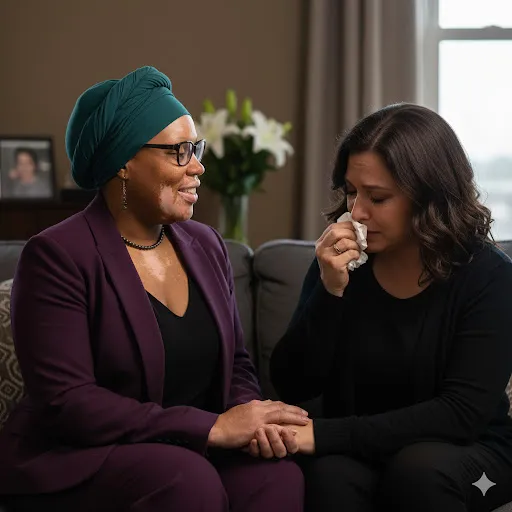
Welcome to Faithful Presence at the EOL
“Faithful presence does not remove suffering, but it ensures no one carries it alone.” - Chaplain Sonja Koenig
Welcome to Faithful Presence at the End of Life
Conversations about death and dying are often avoided in the Church, not because they lack importance, but because they feel difficult and unfamiliar. Yet families facing serious illness, loss, and grief are already carrying these realities—often quietly and alone.
Faithful Presence at the End of Life was created to help the Church show up with compassion, clarity, and steadiness during life’s most vulnerable seasons. This space is dedicated to equipping pastors, chaplains, leaders, and congregations to walk with individuals and families through end-of-life care, dying, and grief in ways that are faithful, informed, and humane.
The focus here is not on having the right words, but on learning how to remain present. Through theological reflection, practical guidance, and real-world insight, this blog invites the Church to move beyond avoidance and toward meaningful care—before, during, and after loss.
You are welcome here. May this space encourage thoughtful engagement, deeper understanding, and faithful presence when it matters most.

With that said, here are 5 reasons why conversations about death and dying are often avoided!
Why Does the Church Avoid Talking About Death & Dying?
Despite the churches main role in faith and theology, death remains one of the least discussed realities in many churches. I don't believe churches intentionally avoid this conversation. More often, it reflects deeper discomfort, uncertainty, and lack of preparation among leaders and congregations.
We must first take the time to understand why these conversations are avoided and take the first step toward faithful engagement.
Discomfort With Mortality
Death forces individuals to confront vulnerability, loss of control, and finiteness. Many within the Church share the same fears as the broader culture, making it difficult to engage openly with end-of-life realities.Fear of Saying the Wrong Thing
Leaders often worry that their words may cause harm or deepen pain. This fear can lead to silence, even though listening and presence are often more valuable than carefully chosen words.Limited Training in End-of-Life Care
Most church leaders receive little formal education on dying, caregiving, or grief. Without training, conversations about death may feel intimidating or outside their competence.Overemphasis on Victory and Hope Language
Church culture frequently emphasizes healing, restoration, and forward movement. While hope is essential, this focus can unintentionally leave little room for lament, sorrow, and honest grief.Uncertainty About Boundaries and Roles
Leaders may feel unsure about how to navigate medical decisions, family dynamics, and emotional distress. This uncertainty can result in withdrawal rather than accompaniment.
Avoidance does not protect families. Faithful presence requires courage, humility, and preparation. When the Church learns to engage these conversations thoughtfully, it becomes a place of refuge rather than silence.
Reflection: Faithful presence begins when the Church is willing to name what is difficult.
Prayer: Gracious God, give us courage to face hard truths with compassion and wisdom. Teach us to remain present and attentive when life feels fragile. Amen.
